
Where there’s muck there’s brass! The astonishing rise of challenger cleaning brands

For decades, the household cleaning aisle was one of retail’s most predictable battlegrounds. The same names dominated: Flash, Cif, Mr Muscle and Dettol. Backed by multinational giants, huge advertising budgets and generations of consumer trust, they had turned cleaning into a habit – reach for the bottle you know and move on.
Bathroom? A familiar brand. Kitchen surfaces? The same trusted names. Oven cleaning? Another established player.
But then the cleaning aisle went viral.
Over the past decade, a new wave of challenger brands has disrupted one of retail’s most entrenched categories. Social media, shifting consumer expectations and demand for specialist, high-performance solutions have created opportunities for businesses once overshadowed by FMCG giants.
Among the biggest beneficiaries is a cluster of Yorkshire-based manufacturers that have transformed the market – rewriting the rules of cleaning along the way.
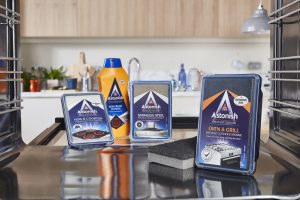 Leeds-based Astonish has grown from a discount-channel favourite into a £70m turnover brand competing directly with multinational rivals. Star Brands in Leeds has turned The Pink Stuff from a traditional cleaning product into a global household name. Meanwhile, Barnsley-based Vamoosh has built a loyal following by solving a very specific modern household problem: stubborn pet hair.
Their products are different, but the strategy is the same: find a problem, solve it better than anyone else and let consumers spread the word.
When cleaning became content
Howard Moss, owner and chief executive of Astonish, has spent more than 30 years in the cleaning industry. When he started his career, the market looked very different.
The disruption, he believes, came from social media.
“The use of social media around eight or nine years ago had a huge impact and benefit to those challenger brands.”
Platforms such as Instagram and TikTok transformed how consumers discovered products. Cleaning stopped being something that happened behind closed doors and became entertainment.
Before-and-after videos, cleaning hacks and product demonstrations created a new form of word-of-mouth marketing that traditional advertising struggled to replicate.
One person accelerated that change.
“A certain Mrs Hinch came along,” Howard says. “She changed the face of cleaning and hygiene because she purposely went out to find what she felt was the best specific product for whatever individual cleaning task she was demonstrating.”
Suddenly, smaller brands were appearing in millions of homes without needing the budgets of global competitors. Astonish recognised the opportunity early.
“We were probably one of the first to really jump on that Instagram platform and engage with these influencers,” Howard says. “We sent them samples. Let them use our products. And it really took off from there.”
Tom Abbey, founder of cleaning brand Vamoosh, says organic online content has been central to the company’s growth.
“It’s helped consumers discover our products and, more importantly, understand that they exist and genuinely work,” he says. “Education is a huge part of what we do because many of the problems we solve haven’t had a dedicated solution before.”
That is particularly important for challenger brands because many are creating categories rather than simply competing within existing ones.
“Seeing real customers demonstrate our products builds trust in a way that’s difficult to achieve through advertising alone,” Abbey adds.
The rise of the specialist cleaner
The biggest change in household cleaning has been the move away from one-size-fits-all products.
Consumers are increasingly looking for solutions to specific problems: pet hair, mould, burnt-on oven grease and dirty washing machines. Rather than buying a single cleaner designed to do everything, shoppers are building collections of specialist products that promise better results.
For Vamoosh, that opportunity came from one of the UK’s biggest household frustrations.
“Consumers are looking to save time and effort when it comes to household chores,” Abbey says. “At Vamoosh, we focus on solving everyday problems that haven’t been solved before.”
The company’s Pet Hair Dissolver targets a problem familiar to millions of pet owners.
“With over 40 million pets in the UK, pet hair is a real frustration for millions of households,” Abbey adds.
“Our products help eliminate the need for extra washes and can even prevent people from throwing away bedding simply because it’s covered in stubborn pet hair.”
That same approach has powered the rise of The Pink Stuff. Owned by Leeds-based Star Brands, the product has become one of the UK’s best-known challenger cleaning brands, turning a traditional paste cleaner into a global consumer phenomenon.
Its success has been driven by the same forces reshaping the wider market: distinctive branding, strong product performance and the ability of social media users to demonstrate results.
That visual proof helped transform what could have remained a niche cleaning product into a mainstream brand.
Together, Astonish, The Pink Stuff and Vamoosh show how challenger businesses have found growth by focusing on something the biggest brands can sometimes overlook: specific consumer frustrations.
The supermarkets take notice
The rise of social media has also changed the relationship between manufacturers and retailers. Historically, securing supermarket shelf space often depended on scale, marketing budgets and long-established relationships.
Now retailers can see consumer demand developing online before products reach stores.
“Strong online traction and consumer demand can certainly help demonstrate that there’s an appetite for innovation,” Abbey says.
For Astonish, winning over supermarkets required a different approach. The business had long been successful in variety and discount retailers, but mainstream grocery represented a significant opportunity.
“We knew that the next step for us was to go from what we call the variety, more discount end of stores into mainstream grocery stores as well,” Howard says.
Rather than immediately competing with established everyday cleaners, Astonish targeted supermarkets with specialist products.
The strategy worked. Once retailers saw shoppers responding to the brand, they wanted more.
“Ironically, it wasn’t just the specialist products that the supermarkets wanted from Astonish,” Howard says. “They actually wanted the everyday cleaners as well because they knew their shoppers trusted the brand but wanted to represent the value as well in store.”
The success of challenger cleaning brands has come from recognising that consumer expectations have changed.
Today’s shoppers are not only looking for a product that works. They want value, convenience, sustainability and a brand they feel connected to.
For businesses such as Astonish, that combination has become a powerful differentiator. Astonish has built much of its reputation around affordability, but the company has always been keen to avoid the perception that lower prices mean lower performance.
That distinction has become increasingly important as households have faced pressure from rising costs. Howard says the business has deliberately resisted taking advantage of periods of uncertainty to push through unnecessary price increases.
“If we look at the two big things that have happened – the banking crisis and COVID – we kept true to our pricing,” he says.
“We never manipulated the pricing. We had opportunities where we could have inflated it. We didn’t.”
“You want to capture a shopper when they are just moving into their own home,” Howard says. “Once they’ve used a product that they feel comfortable with, especially an affordable one like ours, you’ll get real loyalty.”
It is a lesson many challenger brands have embraced. Rather than trying to win every customer immediately, they focus on creating a loyal following around a product that genuinely solves a problem.
Sustainability moves from niche to mainstream
The other major shift in cleaning has been the growing importance of sustainability. For years, environmental credentials were often treated as a specialist consideration. Today, they are increasingly part of mainstream purchasing decisions.
Astonish believes it has benefited from making sustainability part of its product development philosophy long before it became a major consumer trend.
The company says it was the first vegan-approved cleaning brand in the UK and among the first cleaning brands to achieve Cruelty Free International accreditation.
Howard argues those decisions were not simply marketing choices.
“We’ve never done aerosols or any sort of products that are corrosive or have some real harmful impacts to the environment,” he says. “We’ve just never briefed in products to our laboratory that would have that impact.”
The company has focused on biodegradable formulations, recycled materials and reducing packaging impact. Its products contain a minimum of 30% recycled plastic, while some products have moved away from traditional plastic packaging.
The sustainability focus extends beyond the bottle. Around 18 months ago, Astonish installed solar panels across the roof of its Leeds manufacturing facility, with around 40% of its energy use now coming from renewable generation.
The rise of Astonish and The Pink Stuff also highlights another important trend: the continuing strength of Yorkshire’s manufacturing base.
At a time when many consumer goods businesses have looked overseas for lower-cost production, Astonish has invested heavily in keeping manufacturing close to home.
Its £30m site near Leeds is central to the company’s strategy. Howard argues that UK production gives the business flexibility and control that would be difficult to achieve through outsourcing.
“Yes, of course, we could look to outsource the product from markets where labour and manufacturing may be cheaper,” he says. “However, we know that investing at the level we’ve done has given us the most state-of-the-art machinery.”
The facility can produce around 250 units a minute on a production line, combining automation with skilled manufacturing expertise. But the biggest advantage is speed.
Large multinational organisations often have lengthy innovation processes involving multiple countries, departments and approval stages. Independent businesses can move faster.
“If myself or our team here see an opportunity, we’ll discuss it quickly,” Howard says. “If we feel it’s got real potential, then we’ll brief it into the lab, and more often than not, from briefing it into the lab, we’ll be launching it in the market in less than six months.”
For years, the dividing line between challenger brands and global giants was advertising. The biggest companies could afford national television campaigns. Smaller businesses relied on retail relationships and word-of-mouth.
Social media changed that balance. A product could build a following online before spending a single pound on traditional advertising.
Now Astonish believes the time is right to combine digital momentum with mainstream marketing. The company is moving into national television advertising for the first time, with campaigns focused on its oven cleaner and mould and mildew blaster.
The adverts will appear across major broadcasters including ITV and Sky. It marks a significant moment in the company’s evolution.
The strategy is a combination of old and new marketing models. Social media creates discovery. Product performance creates loyalty. Television accelerates recognition.
The global opportunity
While Yorkshire remains the heart of these businesses, international growth is becoming an increasingly important part of the story.
Astonish already exports widely, with established markets across Europe, Asia and the Middle East. The company has built a particularly strong position in Israel, where it has been present for around two decades and has become one of the country’s leading cleaning brands. Now the next major opportunity is the United States.
“Probably the biggest potential that we’ve been working on for the last six months is the US market,” Howard says. The challenge is not demand but complexity.
America is a huge market with different retailers, consumer habits and distribution networks.
“One of the hardest things in the US is just getting your product around,” Howard says. “Having the right partner who can navigate the different territories there is key.”
Success would provide another major growth platform and further demonstrate that challenger brands built outside the traditional FMCG hubs can compete internationally.
The story of Astonish, The Pink Stuff and Vamoosh is ultimately a story about changing consumer behaviour. The cleaning aisle is no longer controlled purely by the companies with the biggest advertising budgets.
The route to growth has changed. A brand can build a community online, prove its effectiveness through real customer demonstrations and arrive on supermarket shelves with demand already established.
The challengers have changed the rules.
They have shown that success does not always come from trying to dominate an entire category. Sometimes it comes from identifying one frustration, one unmet need and one moment where consumers think: finally, someone has made something for this.
For Yorkshire, the success of Astonish, The Pink Stuff and other independent manufacturers represents more than a retail story.
It is a reminder that innovation does not only come from global corporations or technology hubs. Sometimes it comes from factories, laboratories and businesses that understand their customers better than anyone else.
The cleaning aisle may once have belonged almost entirely to the giants. The challengers have proved there is plenty of room left on the shelf.


