Immersive experiences generate £463m for Scottish economy
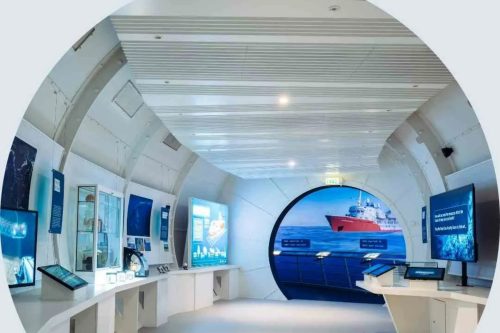
Immersive experiences generated £463m in spending across Scotland in the last 12 months, according to new economic modelling by Grant Thornton UK.
The figure includes wider economic activity through supply chains and employee spending, contributing £233m in GVA to the Scottish economy and supporting around 3,030 full-time equivalent jobs.
An estimated 1.6 million people in Scotland attended an immersive experience in the last 12 months.
Tom Middleton, economic consulting partner at Grant Thornton UK, said: “We’ve always loved a great experience – from Glastonbury and the theatre to visitor attractions and Oasis. But as AI and digital technology become an increasingly important part of how we live, work and do business, the value of shared, in-person experiences is growing too.”
Scotland has become home to a growing number of immersive experiences, where audiences become active participants rather than spectators.
Attractions include Dynamic Earth in Edinburgh, which takes visitors on an interactive journey through the story of planet Earth, and GlasGLOW in Glasgow, an annual Halloween after-dark experience that transforms the city’s Botanic Gardens with immersive light installations, sound and storytelling.
The Experience Economy Index, produced in partnership with Experience UK and academics from King’s College London, found that 44% of those in Scotland who had attended an immersive experience said they ate or drank at a local business, while 40% went shopping locally.
Consumer research carried out for the report found that 38% of UK adults are prioritising experiences to create lasting memories, 36% to spend quality time with loved ones and 25% to enjoy time away from everyday routines.
Two in five say digital overload is making them more likely to prioritise experiences where they can enjoy themselves and feel more present.
Colin Park, tax partner at Grant Thornton UK, based in Scotland, added: “Beyond the venues, £463 million of spending and around 3,030 full-time equivalent jobs supported tells us this is a real and growing part of the Scottish economy. And with 44% of attendees eating or drinking locally and 40% shopping locally, the benefit reaches the restaurants, shops and suppliers around them.”
Grant Thornton research found that 40% of people in the UK are increasingly prioritising spending on experiences over material things, rising to 54% among 18 to 34-year-olds.
Dr Hang-Yee Chan and Dr Ozlem Tetik, professors at King’s College London, said: “The experience versus material preference gap is likely to widen further as younger, more experience-oriented generations gain spending power. Separately, rising AI adoption may increase, rather than reduce, demand for face-to-face, human-mediated experiences, as live and shared moments gain relative value precisely because they cannot be automated.”