AI is spurring growth and improving efficiencies on a huge scale – but it poses serious challenges
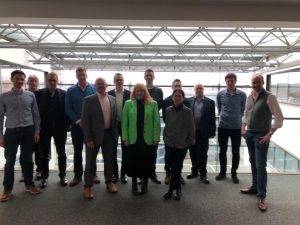
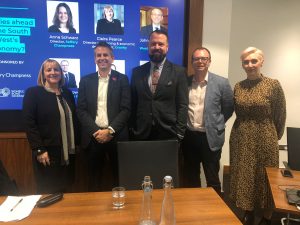
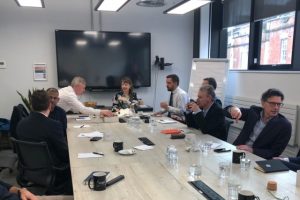
Fast-growing and ambitious South West businesses came together for a round table hosted by TheBusinessDesk.com and Shaw & Co to explore how entrepreneurs are navigating the current landscape and delivering on their own plans.
On the panel were Rob Starr, head of M&A at Shaw & Co, Steve Butterworth CEO of Neighbourly, Alan Bailey, managing director of Future Leap, James Cowdale, from clothing brand &SONS, Serial entrepreneur Andrew Scott, of Purplex Marketing, Simon Pyne of Greener Energy Futures , Kate Sikora, CEO of Noble Performs, Ashley Wood of Solarsense, and Sam Heaton, CEO of Stannp. One key topic was how can AI and automation be leveraged to improve business efficiency and productivity across our operations.
The panel agreed that AI was now essential for growth and was increasingly being used not only to complete routine jobs but for sophisticated marketing tasks.
No business could ignore AI if it wanted to remain competitive –and for smaller businesses, it was proving a highly effective tool to compete against larger rivals. However, it was moving extremely quickly.
 This was stressed by James Cowdale, who emphasised the importance of AI in transforming the way customers for his clothing brand searched for products but it was also now helping businesses to understand market changes and greatly speed up the time between initial design and the product hitting the market.
Another huge advantage for a business like &SONS that relies on customer loyalty was having an AI-driven 'chat' section of the website.
"We've got customers around the world and it gives us a 24-7 service. We believe it gives us a competitive advantage. Our customers have questions and we need to be there to answer them. Some even come on for a chat," he added.
Sam Heaton of Stannp, a direct mailing business, said whole processes, which had previously been labour intensive, could now be done "with just one click".
Andrew Scott agreed that AI had become vital to drive innovation and business growth while it was also improving productivity. He saw it as a huge opportunity - but not one that was entirely new.
"We were introduced AI back in 2000 but people saw it differently then," he told the round table.
"We employed our first computer scientist and machine learning expert - we were probably ahead of the curve.
"But people didn't realise it would happen in this way. It was about streamlining procedures but it's given us a competitive advance in areas such as SEO and digital marketing. Now it's core to the business."
AI was now playing a central role in marketing, said Kate Sikora, particularly in the US where it has already had a huge impact in the way brands connect with consumers.
"It has transformed our industry," she said. "I don't think any other sector has seen its potential as much as we have."
Steve Butterworth CEO of Neighbourly - a community engagement platform that works with major brands - said AI was now beginning to be used in the charity sector after some reluctance.
"It's helping small charities see a huge improvement in their operations which they couldn't achieve before," he said. "They can use it deliver fundraising campaigns or fill out grant application forms. It's the single biggest driver of innovation in any sector and it's interesting how it's now reached ours."
However, there were major considerations around its ethical use. Alan Bailey said there was a need for secure and efficient systems to be put in place.
Rob Starr outlined how Shaw & Co were working alongside clients to look at maximising efficiencies by using AI.
Click here to read the first part of our report from this round table.
 One key topic was how can AI and automation be leveraged to improve business efficiency and productivity across our operations.
The panel agreed that AI was now essential for growth and was increasingly being used not only to complete routine jobs but for sophisticated marketing tasks.
No business could ignore AI if it wanted to remain competitive –and for smaller businesses, it was proving a highly effective tool to compete against larger rivals. However, it was moving extremely quickly.
 This was stressed by James Cowdale, who emphasised the importance of AI in transforming the way customers for his clothing brand searched for products but it was also now helping businesses to understand market changes and greatly speed up the time between initial design and the product hitting the market.
Another huge advantage for a business like &SONS that relies on customer loyalty was having an AI-driven 'chat' section of the website.
"We've got customers around the world and it gives us a 24-7 service. We believe it gives us a competitive advantage. Our customers have questions and we need to be there to answer them. Some even come on for a chat," he added.
Sam Heaton of Stannp, a direct mailing business, said whole processes, which had previously been labour intensive, could now be done "with just one click".
Andrew Scott agreed that AI had become vital to drive innovation and business growth while it was also improving productivity. He saw it as a huge opportunity - but not one that was entirely new.
"We were introduced AI back in 2000 but people saw it differently then," he told the round table.
"We employed our first computer scientist and machine learning expert - we were probably ahead of the curve.
"But people didn't realise it would happen in this way. It was about streamlining procedures but it's given us a competitive advance in areas such as SEO and digital marketing. Now it's core to the business."
AI was now playing a central role in marketing, said Kate Sikora, particularly in the US where it has already had a huge impact in the way brands connect with consumers.
"It has transformed our industry," she said. "I don't think any other sector has seen its potential as much as we have."
Steve Butterworth CEO of Neighbourly - a community engagement platform that works with major brands - said AI was now beginning to be used in the charity sector after some reluctance.
"It's helping small charities see a huge improvement in their operations which they couldn't achieve before," he said. "They can use it deliver fundraising campaigns or fill out grant application forms. It's the single biggest driver of innovation in any sector and it's interesting how it's now reached ours."
However, there were major considerations around its ethical use. Alan Bailey said there was a need for secure and efficient systems to be put in place.
Rob Starr outlined how Shaw & Co were working alongside clients to look at maximising efficiencies by using AI.
Click here to read the first part of our report from this round table.