Roundtable: Clear, long-term strategy needed to make net zero viable
Energy transition is continuing to gather pace across the South West, creating opportunities for corporate activity ranging from major takeovers to smaller-scale community projects.
The region is recognised as a hotbed for innovation in the sector and is home to a number of pioneering projects.
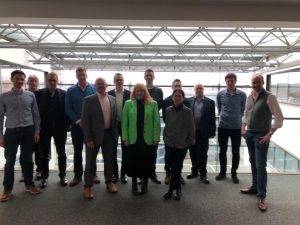
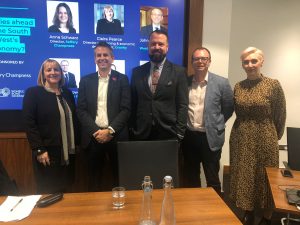
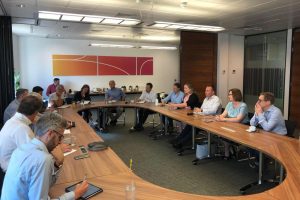
It is also a supportive environment for decarbonisation. TheBusinessDesk staged a roundtable to explore how organisations in the region are working towards a greener future with the Bristol office of international law firm, Womble Bond Dickinson (WBD).
It followed the firm’s publication of its fourth energy transition report, which shows a resilient and revitalised energy sector deeply committed to the principles of decarbonisation.
However, as a relatively young industry, the journey towards net zero presents significant challenges requiring comprehensive, cohesive and pragmatic solutions as well as the need for a clear, long-term government strategy.
The report attracted more than 1,30 responses across 26 countries, a third of which came from the UK.
 These underscored the importance of decarbonisation to commercial energy consumers, with 86% of UK respondents affirming its significance to their organisations.
WBD partner Chris Towner told the roundtable that the responses came from developers of electricity generating projects, those who run and build networks, electricity suppliers and also major customers.
Chris, who is chair of the RenewableUK Offshore Wind Delivery Group and vice-chair of the Renewable Economics and Markets Group, highlighted the growth in businesses connecting solar parks and wind farms to the grid and the potential for M&A activity in the heat network sector.
Tom Fitzpatrick, WBD partner, has worked on a number of deals in the sector, including oil and gas technologies, offshore wind and renewable energy investments.
He shared his experience of working on energy-linked projects over the years, starting with residential rooftop solar panels and feed-in tariffs.
He went on to discuss the challenges and opportunities in the market, including the impact of policy changes and the involvement of international investors.
Mark Naughton, corporate finance partner in FRP’s Bristol office, has worked with owner managers in the energy sector, particularly independent connection providers and installers of heat networks.
He said over the past 12-18 months, there had been an increase in activity in the energy sector. While this activity had been quite broad, it was beginning to narrow into areas such as connection providers, as there had been a “real dearth” of business that can connect the new generation of wind farms and solar parks to the grid.
This included working with those that are looking to raise finance to continue their own growth of looking to exit, as some of the larger operators were looking to broaden their portfolios.
Mark said he had also been working with installers of heat networks, with Bristol one of the leading cities to embrace them.
This technology, which was almost unknow a few years ago, was generating its own corporate activity with funds looking to build and own the networks or operate them.
Technology in this area had now advanced sufficiently for these networks to be a viable option in terms of heating, with regulation driving much of that.
Mark also said he worked with quite a few installers of heat pumps and insulation to make homes more energy efficient.
David Tudgey, community and development director and co-founder of Community Power Solutions (CPS), focuses on developing community energy projects.
Having previously spent 12 years at engineering consultancy Parsons Brinckerhoff, he has broad expertise in the sector.
Describing himself as a self-confessed geek, he said he used to get frustrated watching the way climate change was discussed on TV programmes such as Newsnight and felt he needed to get involved.
Now as a founder of the Bristol Energy Network, he has spearheaded numerous projects that foster community engagement and renewable energy development.
During the discussion, he drew on his work on the Avonmouth wind turbine, the largest community-owned onshore wind project in England and, at 150m, nearly as tall as the Blackpool Tower.
The project has since gained international recognition as an exemplar of community engagement.
David highlighted the importance of local ownership models and the potential for decentralised wind farms and emphasised the need for community engagement and the economic benefits of local energy projects.
He spoke about the introduction of the SIFT (Sustainable, Innovative, Financial Foundations for Turbines) process as a model for community energy projects.
This involves de-risking projects and securing investment from private and public sources. Ther was also the potential for bond offers and other innovative funding mechanisms to support community energy projects.
CPS has a vision to scale up community energy projects across the country, highlighting the economic benefits these can bring to local communities.
These included areas such as fuel poverty and energy efficiency.
“I don’t talk about climate change in communities, I talk about the benefits of the project to the community,” he told the roundtable.
“That means that the community has welcomed us. They haven’t seen this being imposed on them. This model works and I think we’re on the cusp of something interesting.”
 TheBusinessDesk staged a roundtable to explore how organisations in the region are working towards a greener future with the Bristol office of international law firm, Womble Bond Dickinson (WBD).
It followed the firm’s publication of its fourth energy transition report, which shows a resilient and revitalised energy sector deeply committed to the principles of decarbonisation.
However, as a relatively young industry, the journey towards net zero presents significant challenges requiring comprehensive, cohesive and pragmatic solutions as well as the need for a clear, long-term government strategy.
The report attracted more than 1,30 responses across 26 countries, a third of which came from the UK.

Chris Towner

Tom Fitzpatrick

Mark Naughton

David Tudgey